






Why Ultrasonic Electrolytic Mold Cleaning Is Gaining Attention in Plastics Processing

The Hidden Cost of Dirty Molds
In injection molding, the condition of the mold has a direct influence on part quality, cycle stability and scrap rates. During production, gases released from molten plastic, additives, flame retardants, pigments and release agents gradually leave deposits on cavity surfaces, vents and ejector areas. At first these residues may be barely visible, but over time they cause sticking, surface defects, dimensional variation and incomplete filling when vents become blocked. Operators may compensate by adjusting temperature or pressure, which can mask the problem while increasing energy use and wear. Eventually the mold must be removed for cleaning, and every hour it spends out of the press represents lost capacity. Traditional cleaning methods often involve manual scraping, abrasive pastes, solvents or blasting, all of which require skilled labor and carry a risk of damaging polished surfaces, sharp edges and fine textures. For molds with mirror finishes or intricate details, even small scratches can lead to visible defects on finished parts and expensive repair work. These hidden costs explain why molding plants are paying closer attention to cleaning methods that restore mold surfaces effectively while protecting their geometry and finish, and why combined ultrasonic and electrolytic approaches are increasingly discussed in maintenance planning.
How Ultrasonic and Electrolytic Actions Work Together
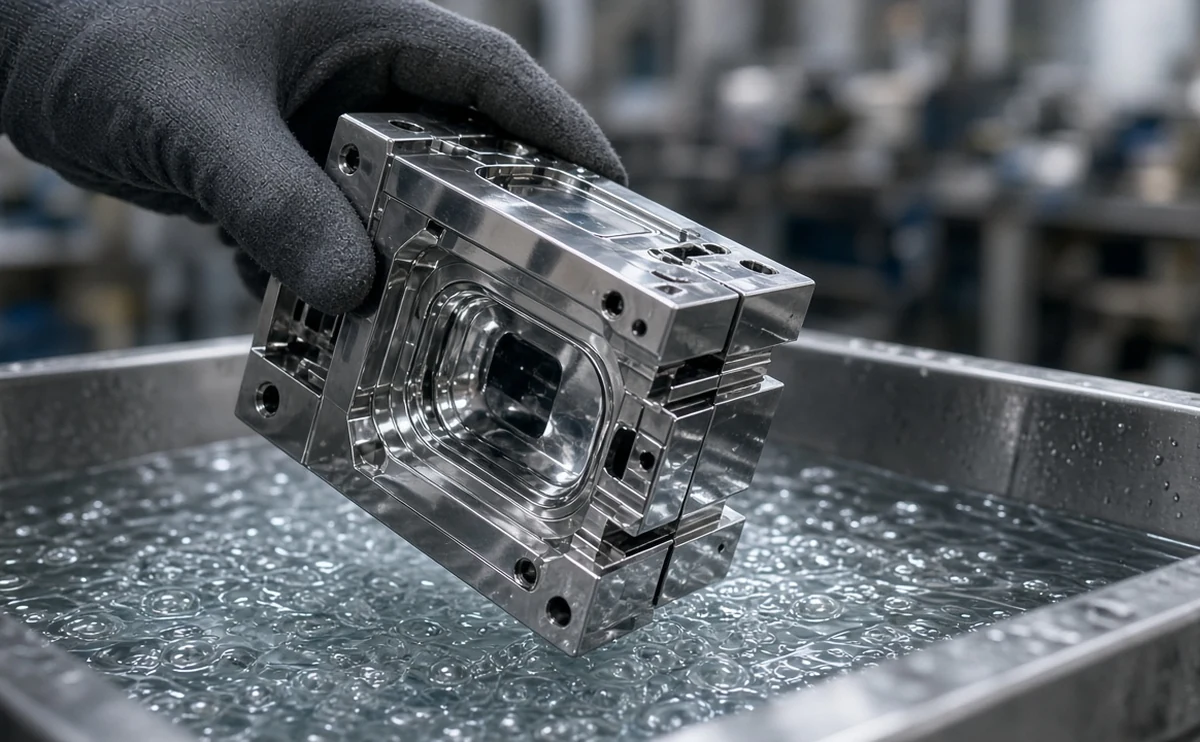
Ultrasonic electrolytic mold cleaning combines complementary mechanisms in a dedicated system. The ultrasonic function creates cavitation in the cleaning solution, producing microscopic bubble collapses that loosen deposits from all wetted surfaces, including deep ribs, small holes and complex textures. The electrolytic function applies a controlled low voltage current between the mold and electrodes in the bath, generating fine gas bubbles at the metal surface. These bubbles help lift residues, oxides and stubborn films from the steel, especially in areas where contamination is tightly bonded. Together, these actions reach contaminants that neither method would remove as efficiently on its own. The process typically uses water based cleaning solutions formulated for molds, which reduces reliance on aggressive solvents. Circulation and filtration systems keep the solution clear and maintain consistent performance as residues accumulate. After cleaning, molds are rinsed and treated with a water based rust inhibitor to protect the steel before storage or return to production. Because the cleaning action does not rely on mechanical abrasion, the original surface finish and dimensions can be preserved when parameters are set correctly. This combination makes the method particularly attractive for precision and high gloss molds that are costly to repair.
Typical Contaminants and Mold Types
The range of contaminants found on molds is wide, and understanding them helps set realistic expectations for any cleaning method. Gas residue layers form when volatile components of the plastic condense on cooler cavity surfaces, often appearing as hazy or sticky films. High temperature decomposition products can leave hard, dark deposits that are difficult to remove manually. Flame retardant materials, pigments and toner residues may build up in vents and parting lines, while surface oxides and light rust can develop during storage. Oil stains from lubrication and handling add another layer. Molds that benefit from ultrasonic electrolytic cleaning include injection molds for consumer and automotive parts, precision instrument molds, connector molds with fine features, sealing component molds, stamping dies and forming tools. Optical and mirror finish molds are a particularly strong use case, since their surfaces must remain free of scratches and marks. Rubber molds and molds for medical components also require thorough cleaning without damaging critical details. In each case, the cleaning approach should be validated with the actual mold material, coating and contamination, because some coatings or special alloys may require adjusted parameters or specific solutions to achieve the best results safely.
Building a Safe and Repeatable Cleaning Procedure
A reliable mold cleaning procedure starts with preparation. Molds should be cooled, disassembled where appropriate and inspected so that any damage or wear is noted before cleaning begins. Removing loose debris and heavy grease beforehand helps keep the cleaning solution in good condition. Inside the cleaning system, the mold or mold components are positioned so that all critical surfaces are exposed to the solution, with attention paid to electrode placement and secure electrical contact. Cycle settings, including cleaning time, temperature, ultrasonic power and electrolytic current, should follow guidelines from the equipment and chemistry suppliers and be refined through trials. After the cleaning stage, thorough rinsing with running water removes residual solution and loosened particles, followed promptly by rust prevention treatment. Molds should then be dried and inspected again, ideally under good lighting and magnification for critical surfaces. Recording settings and results for each mold creates a reference for future cleaning and helps standardize the process across operators. Safety practices are equally important, including the use of gloves and eye protection, proper handling of heavy mold components and following electrical safety instructions. A clear, documented procedure transforms mold cleaning from an improvised task into a controlled maintenance operation.
Impact on Production Planning and Mold Life
When molds can be cleaned more quickly and thoroughly, maintenance planning becomes more flexible. Instead of waiting until defects force a mold out of production, plants can schedule regular cleaning at convenient times, such as product changeovers or planned maintenance windows. Clean vents and cavities help stabilize the molding process, reducing the need for constant parameter adjustments and lowering the rate of rejected parts. Because the cleaning method avoids abrasive contact, the risk of rounding sharp edges, enlarging vents or dulling polished surfaces is reduced, which contributes to longer mold life and fewer expensive repairs. Tool rooms also benefit from reduced manual workload, freeing skilled toolmakers to focus on repairs, modifications and improvement projects rather than repetitive scraping and polishing. In addition, a standardized cleaning process provides consistent documentation, which is valuable when customers or quality teams request evidence of maintenance practices. Over time, these effects can translate into better equipment utilization and more predictable delivery performance. Each plant will experience these benefits differently depending on its product mix and current practices, but the general direction is a shift from reactive cleaning toward planned, repeatable mold care that supports overall manufacturing efficiency.
Questions to Ask Before Investing
Before investing in ultrasonic electrolytic mold cleaning equipment, it helps to evaluate needs carefully. Start by reviewing the size, weight and number of molds that require cleaning, since tank dimensions, lifting arrangements and floor space must accommodate the largest and heaviest components. Consider the types of contaminants encountered and whether trials can be arranged with representative molds to confirm results on real surfaces. Ask suppliers about the cleaning solutions and rust inhibitors recommended for the system, including how they should be stored, replaced and disposed of according to local regulations. Clarify how circulation and filtration are handled, how electrodes are positioned and what safety features are included. It is also useful to understand how the equipment will fit into the existing maintenance workflow, including rinsing, drying and inspection stations. Training for operators and documentation for maintenance should be part of the discussion, as should availability of spare parts and technical support. Non standard dimensions and configurations are often possible, so describing your specific requirements clearly helps suppliers propose a suitable design. Taking time to answer these questions leads to equipment that fits the plant’s real needs and delivers dependable results over its service life.
Supporting Tool Room Teams and Knowledge Transfer
Introducing ultrasonic electrolytic cleaning also changes how tool room teams share knowledge. Instead of relying on the personal techniques of experienced toolmakers, the plant can document cleaning steps, settings and inspection criteria that newer staff can follow with confidence. This reduces the risk that valuable experience is lost when people change roles, and it makes training more structured. Toolmakers can still contribute their expertise by deciding when a mold needs cleaning, how it should be disassembled and which surfaces require special attention during inspection. Combining their judgment with a repeatable cleaning method often delivers the best results. Regular reviews of mold condition and cleaning outcomes help refine procedures further, ensuring that the investment continues to support mold quality, production stability and the professional development of the maintenance team.